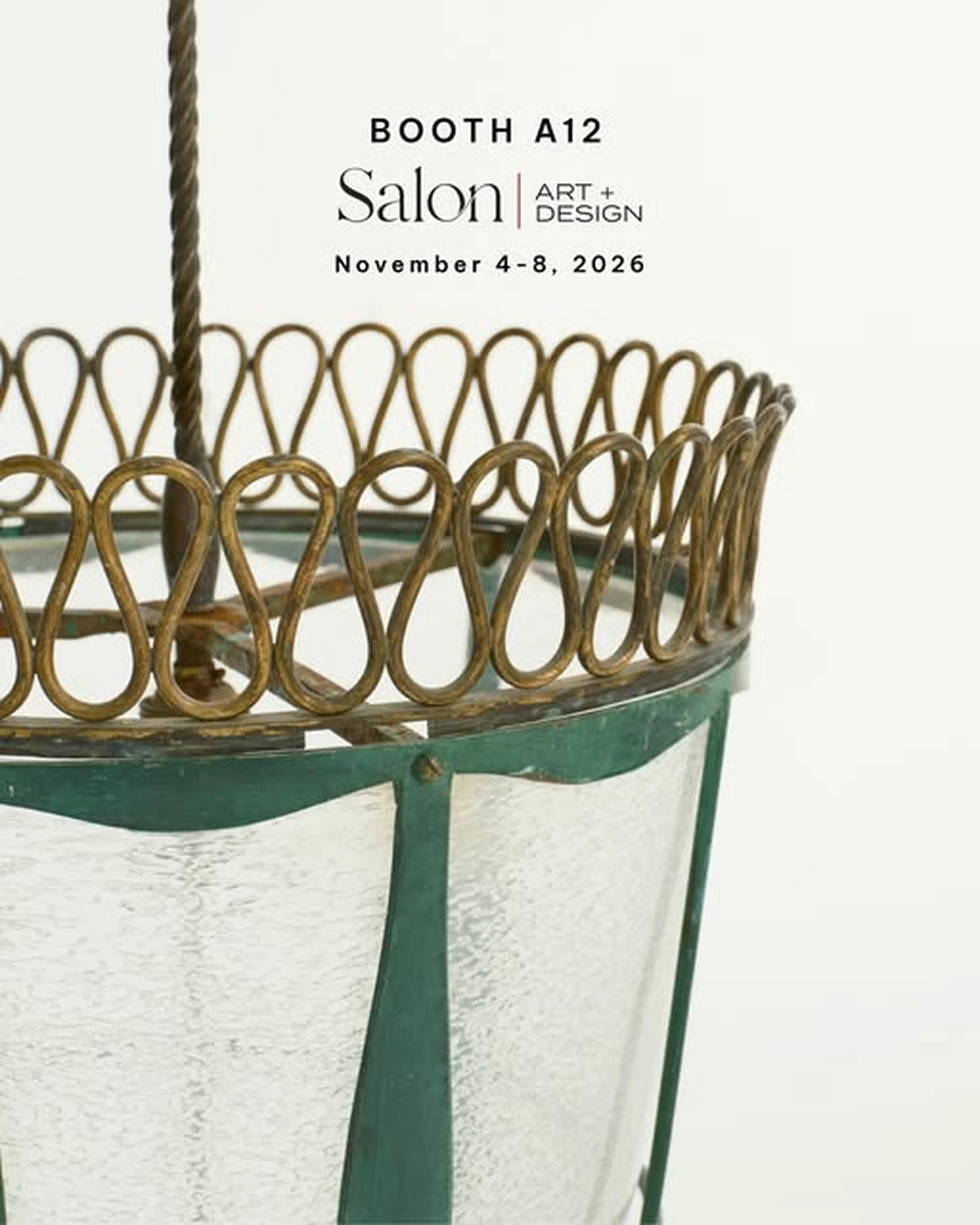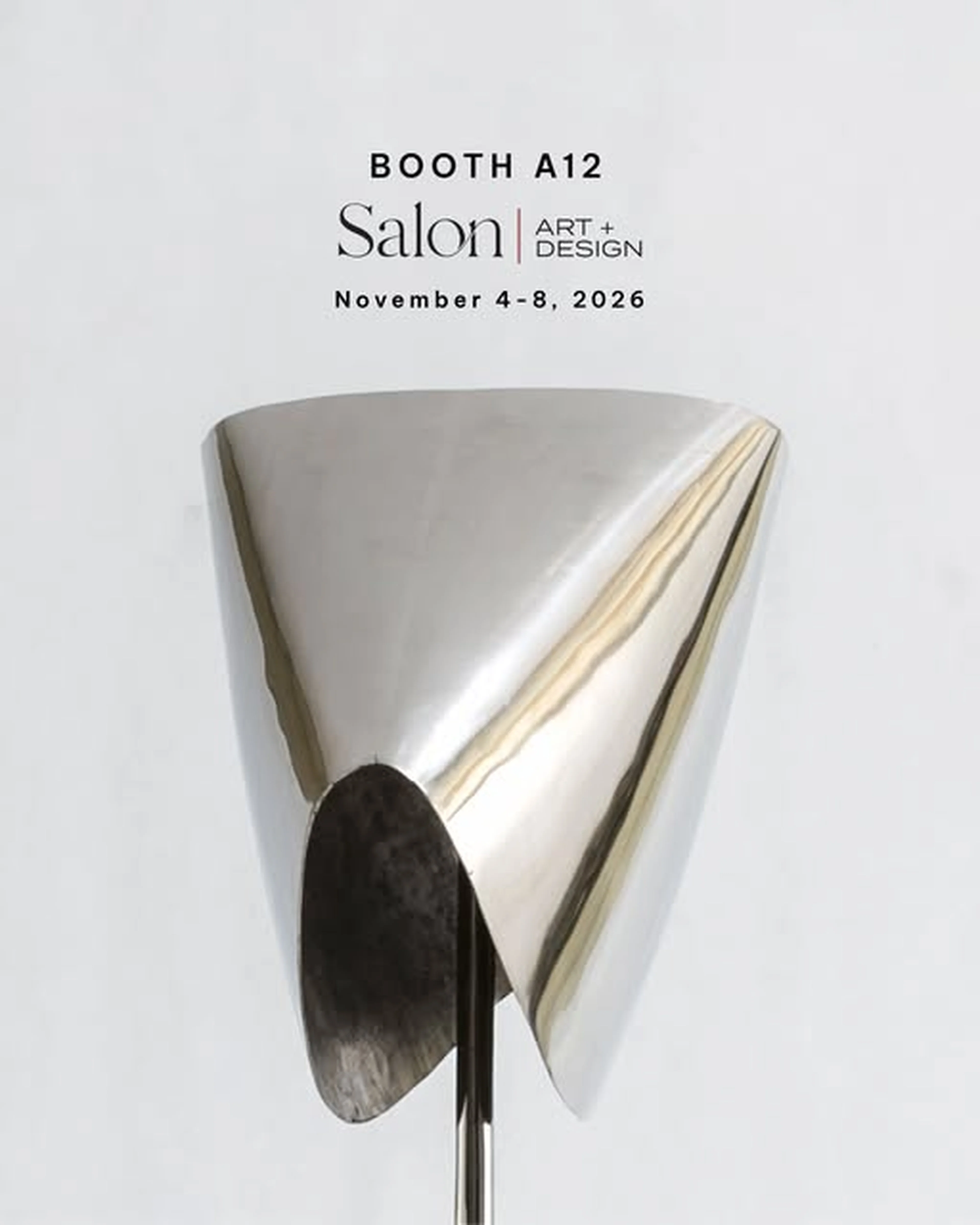
Salon Art + Design 2026, November 4–8, Booth A12.
Curated by Alexander May
Art curated by Shem Jacobs.
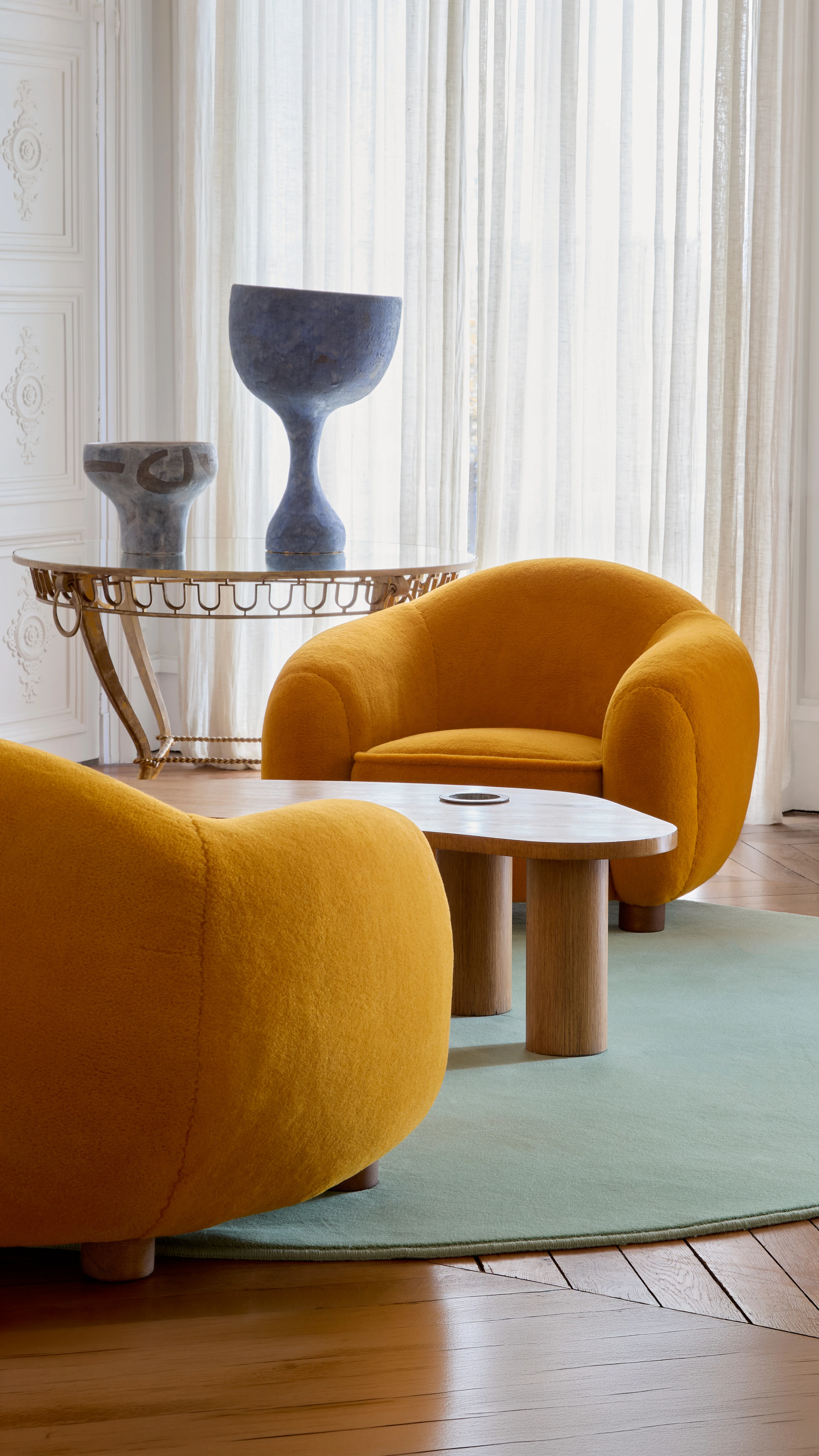
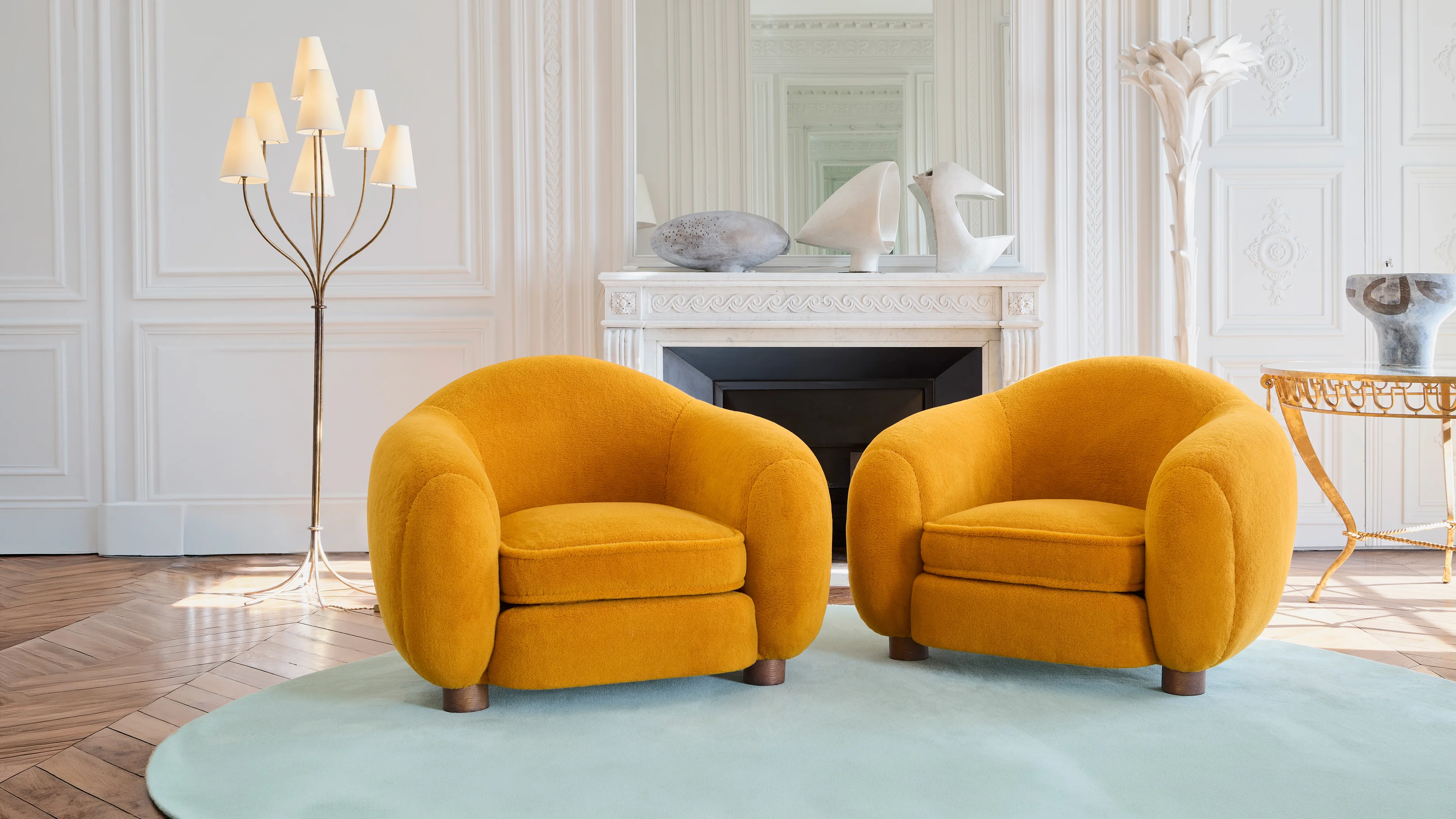
JEAN ROYÈRE
A master of playful modernism, Jean Royère transformed furniture into sculptural expressions of imagination, elegance, and individuality.
ONE PIECE
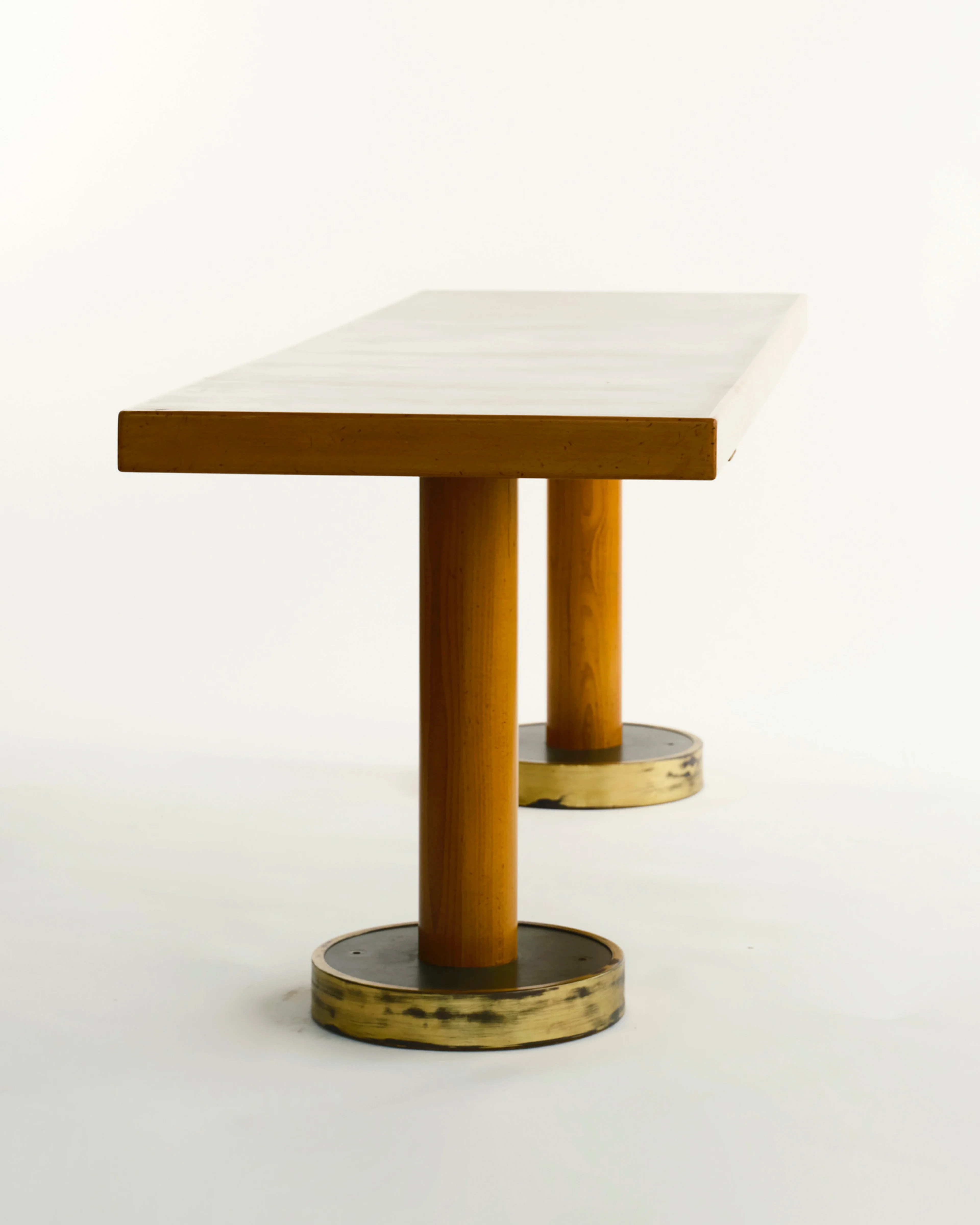
Gio Ponti, “Conte Grande” Dining Table, c. 1947
There are pieces of furniture that carry with them the story of a place. This table by Gio Ponti is one of them. Conceived around 1947 for the dining room of the celebrated Italian ocean liner Conte Grande, it belongs to interiors Ponti approached as complete environments, at a moment when Italian design was finding a new language after the war. The table already holds the ideas that would define his work: lightness despite its scale, a precise architectural structure, and an unexpected combination of beech and oak with brass and tinted melamine. Its long, narrow proportions also give it a second life today as a striking console. It is a true document of Ponti’s work on the great Italian liners.
ONE PIECE
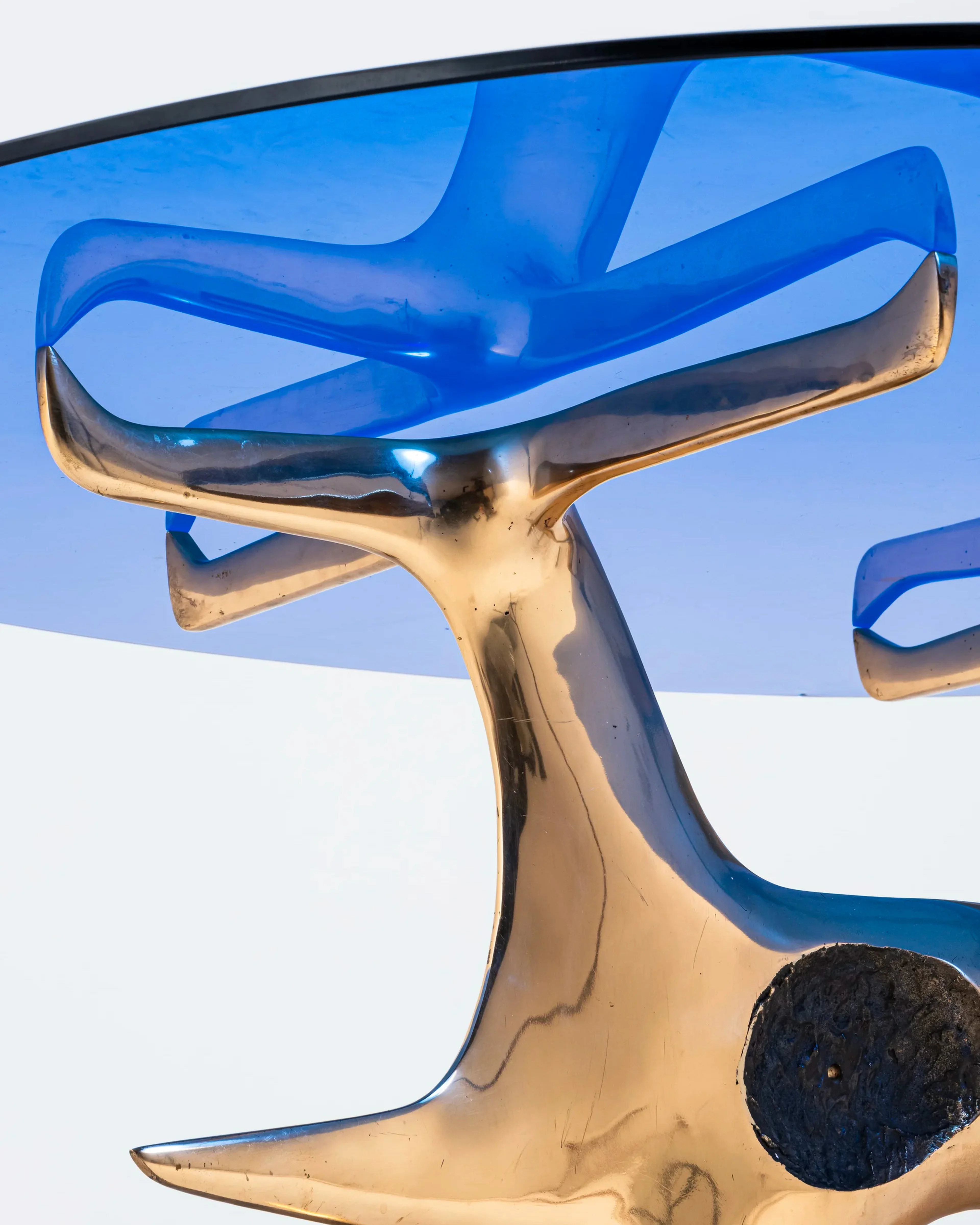
Victor Roman, “Araignée” Center Table, c. 1970
Victor Roman (1937–1995) was a French sculptor of Romanian origin whose work moved between abstract sculpture, monumental public commissions and functional objects. Raised in rural Transylvania, he transformed familiar agricultural forms, particularly the plough, into abstract compositions exploring mass, movement and empty space. Created around 1970, the Araignée table extends this sculptural language into furniture. Its bronze structure unfolds into branching, spider-like forms that support the original blue glass top, whose transparency reveals the entire composition from every angle. Roman never treated furniture as a separate discipline, and the result sits naturally between sculpture and design.
On view at Galerie Gabriel, New York.
ONE PIECE
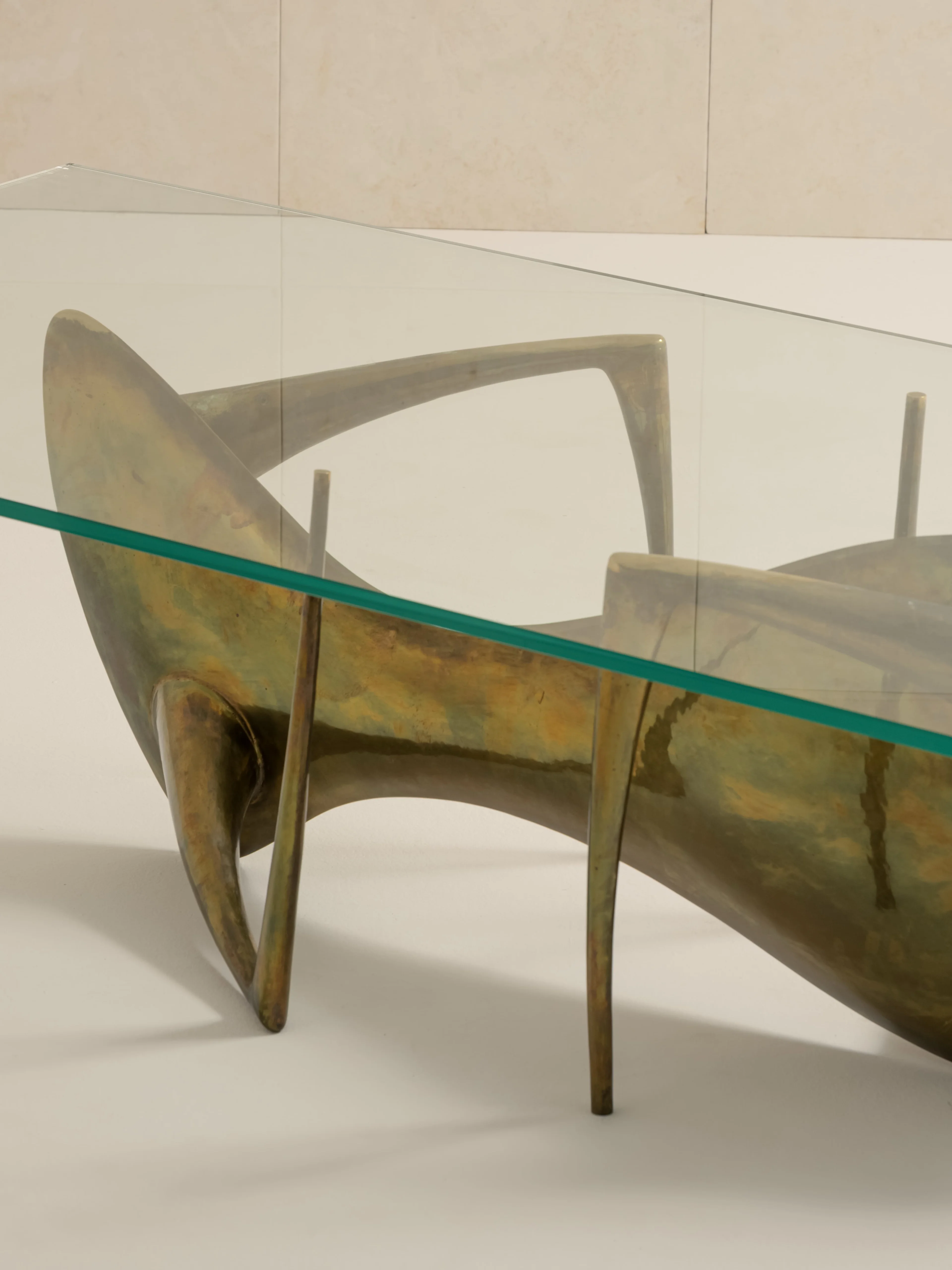
Philippe Hiquily Femme Cubiste Coffee Table
Philippe Hiquily’s Femme Cubiste blurs the line between art and furniture, transforming the female form into a sculptural, sensual and functional piece.
Known for his sculptures, Hiquily later explored furniture through collaborations with legendary decorator Henri Samuel, creating works where art and function become one.
A unique piece with important provenance and a remarkable story.
ONE PIECE
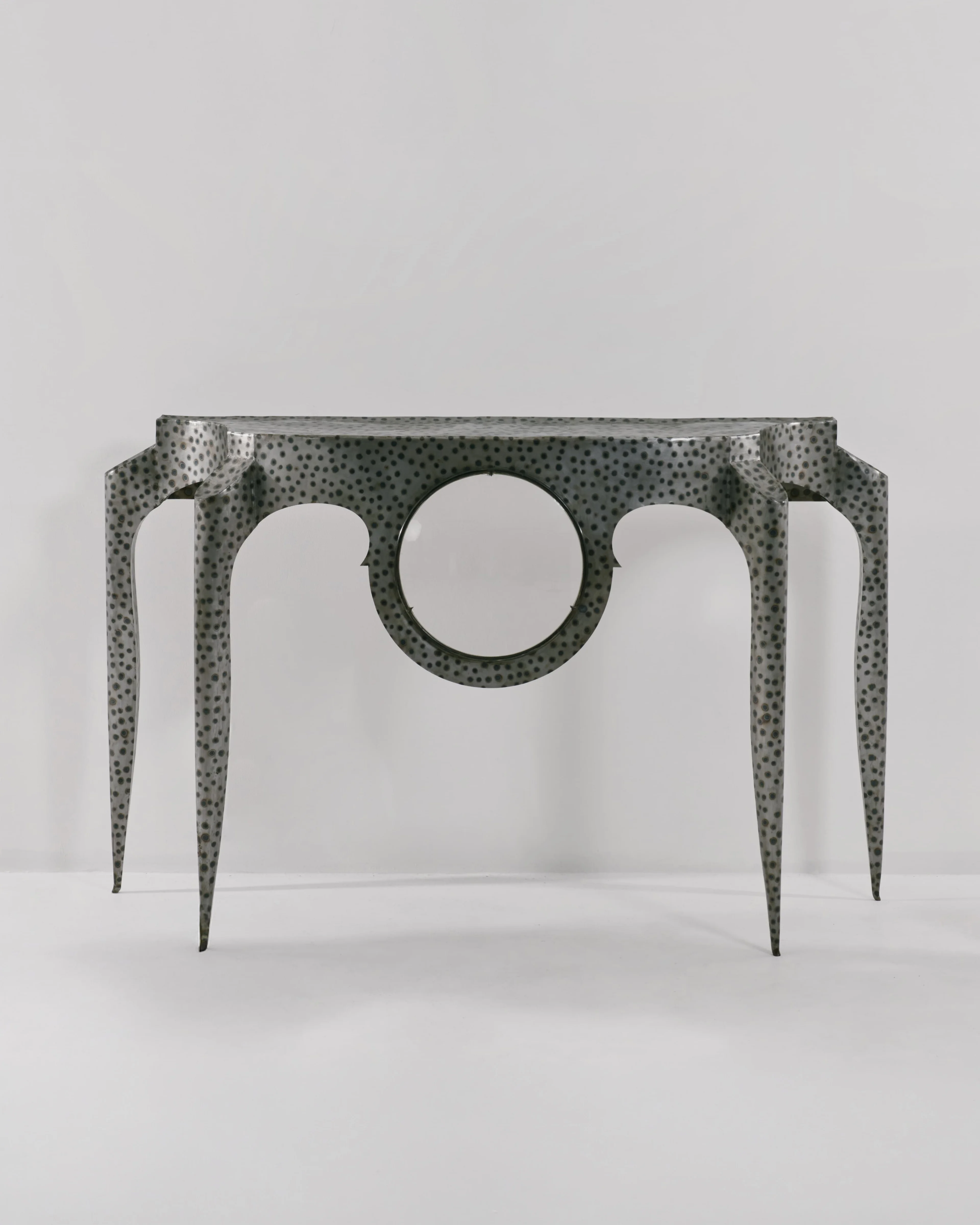
André Dubreuil — the blacksmith who broke the rules
In 1980s London, André Dubreuil transformed scrap steel into sculptural furniture, becoming a leading figure of the Creative Salvage movement alongside Tom Dixon and Mark Brazier-Jones.
Drawing inspiration from Gothic, Baroque and Rococo art, he combined classical elegance with a bold, unconventional approach to metalwork.
Favoring unique pieces and limited editions over mass production, Dubreuil created furniture that celebrates craftsmanship and individuality.
His work is now held in major collections, including the V&A and the Musée des Arts Décoratifs.
ONE PIECE
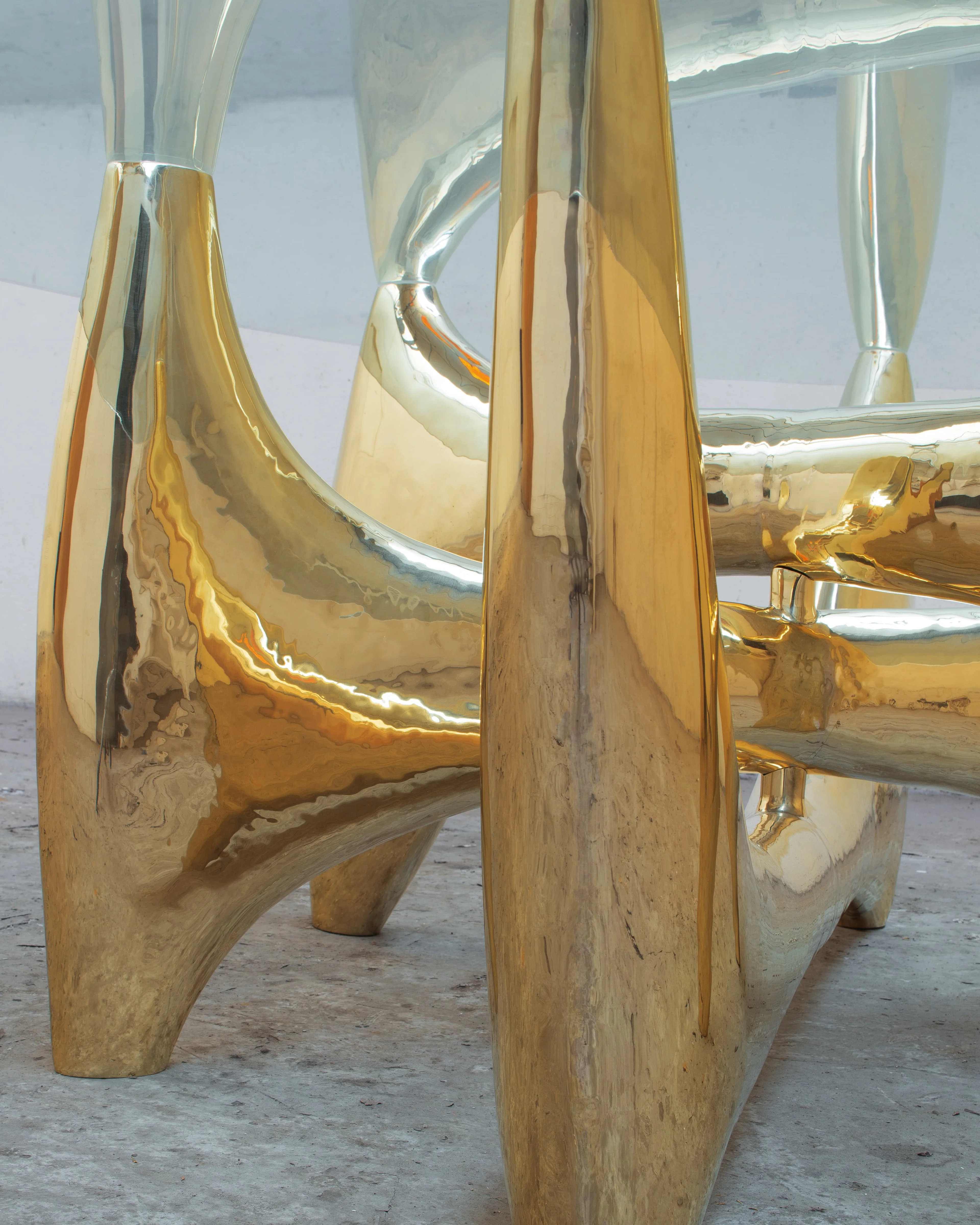
Philippe Hiquily Van Zuylen Dining Table, 1967 No. 6 of 6
Originally conceived for the aristocratic Van Zuylen family, closely linked to the Rothschild dynasty, this monumental dining table is among Philippe Hiquily’s rarest and most significant furniture creations.
Combining sculptural presence, exceptional scale and prestigious provenance, it embodies Hiquily’s vision of furniture as functional sculpture.
Currently on view at the gallery is number 6 of 6, the final example of this exceptionally limited edition.